In today’s digital age, the role of Internet Service Providers (ISPs) is more critical than ever. As the gatekeepers of internet access, traditional ISPs have long dominated the market, offering a range of services that vary in speed, reliability, and cost. However, the landscape is undergoing a seismic shift with the entry of Starlink, a satellite-based ISP backed by SpaceX. This revolutionary service aims to redefine what we can expect from our internet connection, especially in areas poorly served by traditional ISPs. This post will delve into a comprehensive comparison between Starlink vs. traditional ISPs, examining various factors such as speed, cost, and quality of service to help you make an informed decision.
The Changing Landscape Of ISPs
For years, traditional ISPs have been the go-to option for internet connectivity. These providers, often offering services through DSL, cable, or fiber-optic connections, have a stronghold in urban areas but often fall short in providing reliable services in rural regions. The market has been crying out for an alternative, and that’s where Starlink comes into play.
Starlink, a venture by SpaceX, is not just another ISP; it’s an ambitious project that aims to provide high-speed internet globally using satellites. Already operational in the United States, Canada, and the United Kingdom, Starlink is poised to expand its reach. This expansion isn’t just about adding another name to the list of ISPs; it’s about offering a viable, perhaps superior, alternative to traditional services.
Speed And Reliability: A New Benchmark

When it comes to internet connectivity, speed and reliability often top the list of consumer concerns. Traditional ISPs generally offer a range of speeds, often up to 100 Mbps, but these numbers can be misleading. Factors such as network congestion and distance from the service hub can significantly impact actual speeds, leading to a less-than-ideal user experience.
Enter Starlink, with its promise of speeds up to 100 Mbps and impressively low latency as low as 20 milliseconds. What sets Starlink apart is the technology behind these numbers: a constellation of low-Earth orbit satellites that work in tandem to provide consistent, high-speed internet. This isn’t just about matching the speeds offered by traditional ISPs; it’s about setting a new benchmark for what consumers can expect from their internet service.
The Cost Factor
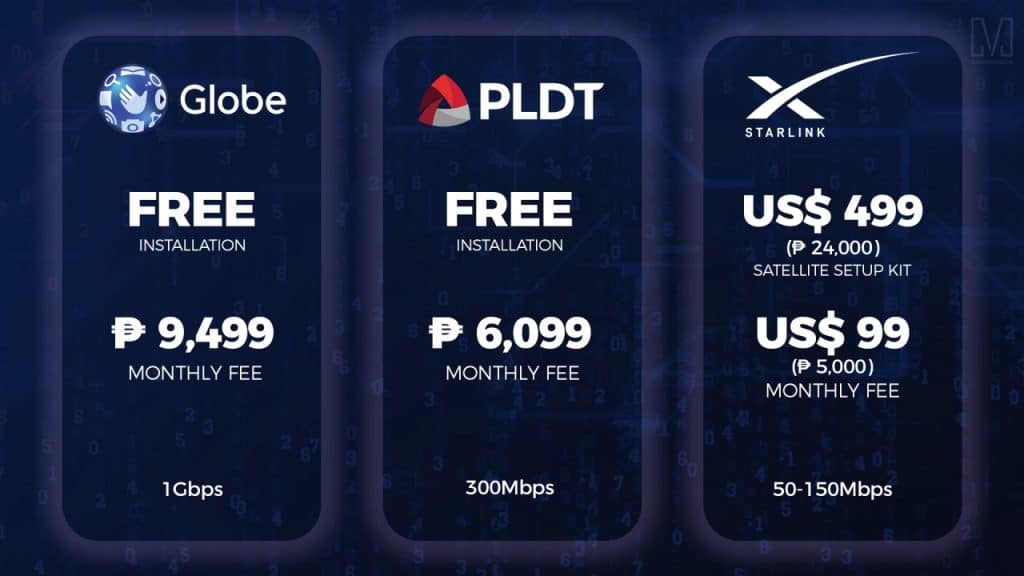
Cost is often a decisive factor when choosing an ISP. Traditional ISPs usually offer a range of plans, starting from basic packages that can cost as low as $50 per month. However, these costs can quickly escalate with added features, higher speeds, and, sometimes, hidden fees. Moreover, the advertised price often doesn’t include installation fees, which can be another financial hurdle for consumers.
Starlink, on the other hand, offers a straightforward pricing model. For $99 per month, users get access to high-speed internet, with a one-time installation fee of $499. While the upfront cost may seem steep, it’s essential to consider what you’re getting: potentially faster speeds, lower latency, and the freedom to set up anywhere. For many, especially those in rural or remote areas, this price point could be a worthwhile investment for a vastly improved internet experience.