The dawn of artificial intelligence (AI) marks a significant shift in various sectors, and healthcare stands as one of the most impacted domains. AI is rapidly transforming healthcare, enabling a revolution that holds promise for more accurate diagnoses and efficient treatment plans. In this article, you delve into how AI is center stage in healthcare, improving diagnostics and reshaping treatments.
Contents
Diving Into Artificial Intelligence In Healthcare

Artificial intelligence is a facet of computer science that empowers machines to mimic human intelligence—learning, reasoning, problem-solving, perception, and language. In healthcare, this involves creating algorithms that can process vast amounts of data to provide valuable insights or perform tasks typically needing human comprehension and precision. AI’s potential extends across numerous healthcare areas, from patient data management to drug discovery and even direct patient care.
Healthcare has always been a data-intensive field, making it ripe for AI adoption. Utilizing AI, healthcare providers can analyze complex medical data, spot patterns, and generate predictive models for more personalized and efficient patient care. Such extensive use of AI in healthcare has opened a myriad of possibilities, ensuring a data-driven approach to disease diagnosis and treatment.
The Power Of AI In Disease Diagnosis

The early and accurate diagnosis of diseases can dramatically impact patient outcomes, and this is where AI is making a substantial difference. With the ability to analyze and interpret medical images, AI can support radiologists by highlighting areas of concern in scans that might be easily overlooked. One study found that an AI algorithm could identify skin cancer with accuracy comparable to dermatologists, showcasing the technology’s potential.
Moreover, AI can sift through vast quantities of patient data, identifying patterns that signify early warning signs of chronic illnesses like diabetes or heart disease. Predictive algorithms can alert physicians to these risks, allowing for timely interventions. The ability of AI to work with big data sets, coupled with machine learning algorithms, is transforming disease diagnosis, making it quicker, more accurate, and, ultimately, lifesaving.
AI In Personalized Treatment Plans

Every individual is unique, and so is their response to treatments. AI is instrumental in decoding this complexity by creating personalized treatment plans. AI algorithms can analyze an individual’s genetic makeup, lifestyle, and health history, assisting doctors in designing treatments that are most likely to be effective. For instance, in cancer care, AI can help doctors understand a tumor’s genetic makeup and predict which treatments the patient will respond to best.
Additionally, AI can assist with ongoing monitoring of a patient’s response to these treatments, adapting the care plan as necessary. Real-time health data can be continually fed into the AI system, adjusting treatment based on the individual’s response. This capacity for personalization has the potential to improve patient outcomes significantly and reduce unnecessary side effects.
Artificial Intelligence In Surgery And Postoperative Care
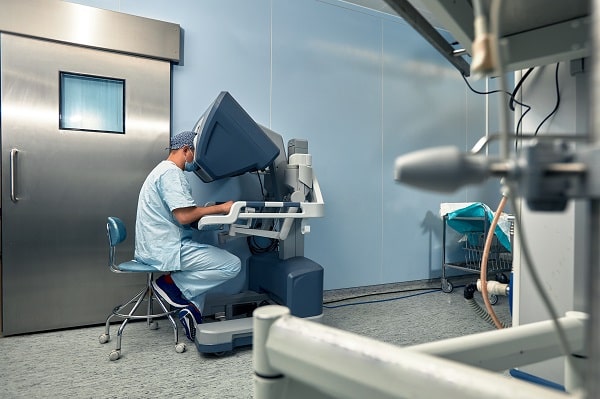
In the operating room, AI is breaking barriers. Surgical robots driven by AI can perform intricate procedures with precision beyond human steadiness. These robots, guided by surgeons, can reduce the risk of complications and enhance patient recovery. One such example is the da Vinci Surgical System, which has performed more than six million surgeries worldwide.
Postoperatively, AI-powered systems help with patient monitoring, tracking vital signs, and alerting healthcare staff if intervention is needed. These systems ensure a close watch on patients, reducing the risk of complications and promoting timely intervention if problems occur. This use of AI, both during and after surgery, elevates the standard of care provided to patients.