Sometimes it feels like the future is here already. The world is changing rapidly, and it’s hard to keep track of all the new technology that is being introduced every day. Every year, we seem to be getting closer to the technology from movies like Blade Runner or Minority Report, and there will always be something new coming out soon enough. From AI to virtual reality, it is incredible to see all the invitations being made all the time. Here are some tech trends worth watching this year to get a better idea of what is coming next!
Quantum Computing

We’ve seen a lot of developments in recent years, and 2022 might be the year! Researchers are focused on achieving quantum supremacy, which is when a quantum computer can complete a calculation that a classical computer cannot. A quantum computer, if constructed correctly, might be capable of breaking encryption and solving some of the most challenging issues.
Google was the first to achieve this goal, using a device with 54 qubits (quantum computing bits) to execute an essentially useless calculation called a random sampling calculation. In 2021, a team at the University of Science and Technology of China used 56 qubits to solve a more complex sample retrieval problem and later 60 qubits to advance it even further. Getting further and further each year, it’s exciting to see where this trend will be by year’s end.
Virtual Reality (VR)
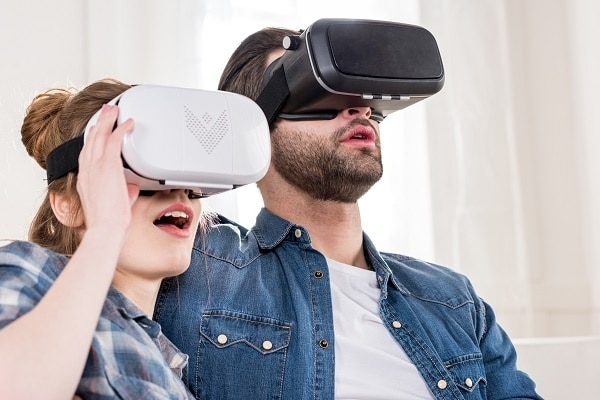
Virtual reality has become a market standard now, and it seems that 2022 will bring even more. With the release of Oculus Rift S and the highly anticipated release of a VR headset from Sony, you are seeing a push towards high-quality standalone virtual reality headsets ready to hit shelves this year and next. Many VR development firms now include machine learning and artificial intelligence (AI) in their programs. The public may see this in simple capabilities and is already being used in several more complex applications across many sectors.
With all the things that can be done with VR, it is a trend to watch this year! This has resulted in computer vision, enabling devices to perceive and comprehend everything within a camera’s sight. This concept has been somewhat basic in recent years. However, it is expected that this will make considerable advancements over the next year. Another excellent example of this is Google’s machine learning-enabled microscope, which is increasingly able to identify cancer cells in tissue samples. This could lead to more precise medical technologies and allow for more complex treatment and diagnostic tools, all of which are enhanced by VR.